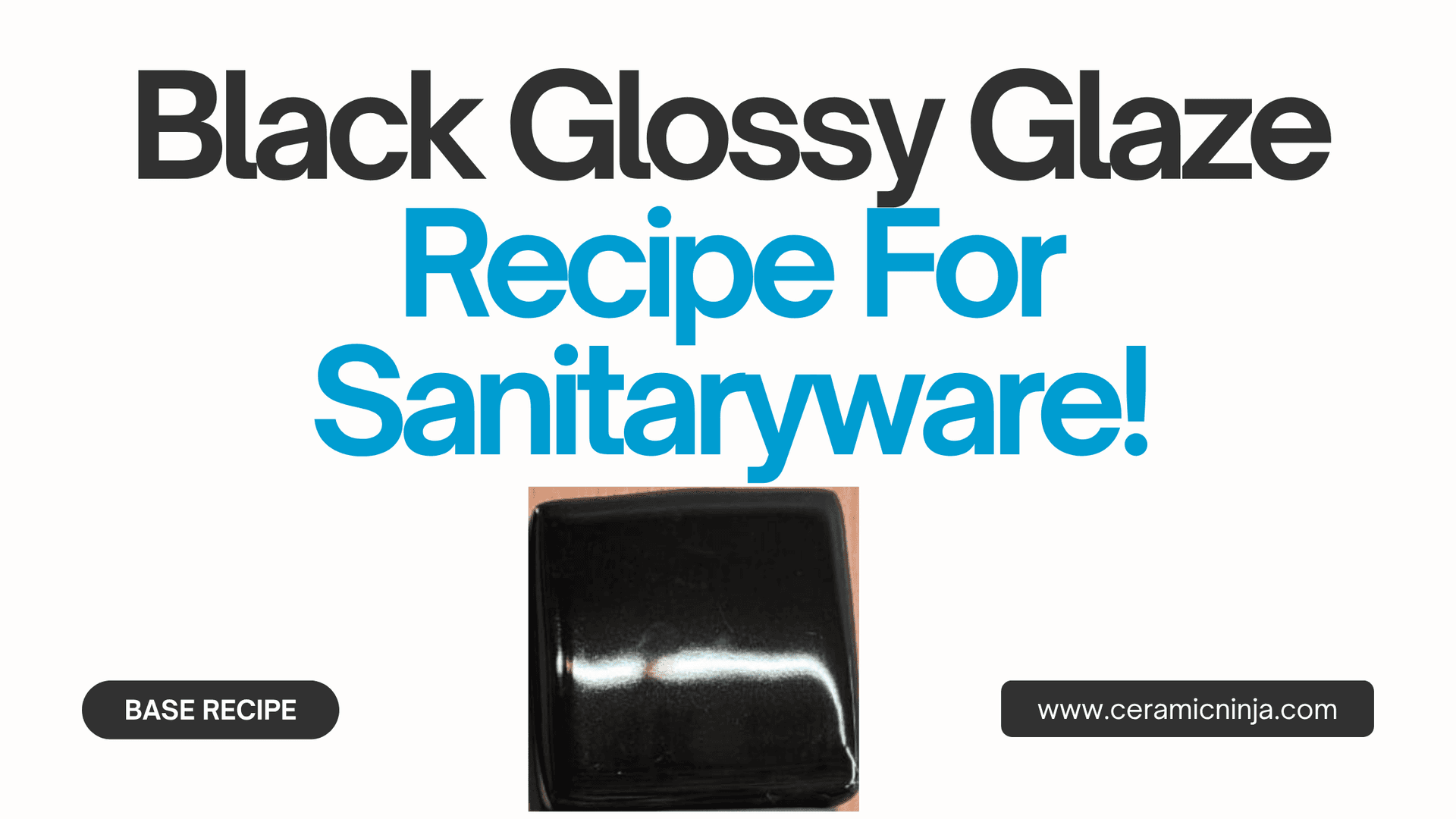
Black Glossy Glaze Recipe for Sanitaryware Manufacturing
In sanitaryware manufacturing, black glaze is one of the most widely used colours after white and ivory. Black provides premium appearance, good finish, and strong pricing commmand in market which makes it a popular choice for sanitaryware products b
In sanitaryware manufacturing, black glaze is one of the most widely used colours after white and ivory. Black provides premium appearance, good finish, and strong pricing commmand in market which makes it a popular choice for sanitaryware products by manufacturers.
In this article, we will look at a base recipe for a black glossy glaze used in the sanitaryware industry. This glaze can serve as a starting point for developing black glaze. From this base formula, R&D can further adjust the composition to achieve the exact L,A,B values, gloss level, surface quality based on the firing curve and the raw materials quality
Development Note: The percentages listed below are starting points of recipe. The exact values needs to be adjusted based on the raw material chemical properties, firing peak temperature, kiln curve/atmosphere, and color specturam value requirements. Always conduct laboratory trials before full-scale production.
Base Recipe — Black Glossy Glaze
| Raw Material | Percentage (%) |
|---|---|
| Potash Feldspar | 36 |
| Quartz | 20 |
| Kaolin (Cina clay ) | 06 |
| Talc | 04 |
| Barium | 05 |
| C.C.C | 09 |
| Wollastonite | 20 |
| Total | 100% |
| Raw Material | Percentage (%) |
|---|---|
| Black Stain / Pigment | 06 |
| CMC | 0.2-0.5 |
Notes
Black Stain / Pigment — typically a cobalt-manganese or iron-chromium based system — is critical for achieving a rich, deep black tone with sufficient colour stability at sanitaryware firing temperatures.
Further Development
This recipe is a base starting point. You are encouraged to conduct systematic trials, adjusting flux levels, pigment loading, and firing conditions to arrive at the optimum glaze for their specific production environment and quality standards.
If you would like to learn more about sanitaryware glaze development, feel free to explore more technical articles and recipes covering glaze chemistry, colour development, and firing optimisation across the ceramic industry.
Share this article

Previous
Efficency of Offline Programming in Sanitaryware Robotized Glazing
Next
% of Moisture Content Testing: Methods and Best Practice

Written by
Venkatmani
Ceramic industry professional & content contributor.
Leave a Comment
Add your comment
No comments yet. Be the first to share your thoughts!